Showing posts with label rule abuse. Show all posts

Monday, 2 April 2012

Lets Read Mythus pt7

Welcome to this week's installment of Lets Read Mythus. Or should that be Lets Reach for the Meths? Oh well, too late to change now... (which is my standby excuse for all my many faults and excesses)

Today we'll be covering sections 4 and 5 of Advanced Mythus character generation: skills and general persona information.

Section 4: The Knowledge/Skill Areas

This section covers pp 96-101 of the rulebook and -- in a marked departure from established Mythus tradition -- compresses quite a bit of information into its six pages.

Page 96 does come on in the same old way (wordy), so we shall meet it in the same old way (sarky). Two paragraphs caution the reader that having a skill doesn't mean you can use it flawlessly. This is so numbingly obvious a statement that I can feel my face seizing up, tragically rendering me unable to offer comment or critique more structured than a loud "A-duuuuuh" noise.

This specimen-quality sample of RPG obviousness is followed by a section on Universal K/S Areas Known to All HPs, or ‘universal skills’ as they are known among people without a raging neologism fetish. Each HP gets 5 or so of these. Skills, not fetishes.

Etiquette - which might actually be useful in status-conscious pre-modern societies. It is worked out as 5xSEC+MMCap. That's five times social class: posh people obviously being better mannered 'n' that. Primitive vocation types get a flat '5' to this skill when outside their home culture, but civilised folk get to swan around the Primitives’ lands with their courtly manners working at full effect. I offer a trenchant "Balls!" to that: different standards of etiquette does not imply a lack of same. Honour, respect, good manners, 'face' and taboo are universal human concepts, albeit with specific cultural manifestations.

Native Tongue - you speak whatever you spoke growing up at 5xSEC+MMCap. Toffs talk better than plebs, which makes sense: moar edjamikashun meens clevura wordin's.

Perception - 2 separate skills, Physical or Mental. Your vocation's Trait determines which you get, Spiritual types can pick. If you have both skills (probably through a vocation skill package, or later purchase with APs) you get two Perception checks to notice something. Interesting ruling that.

One oddness though:


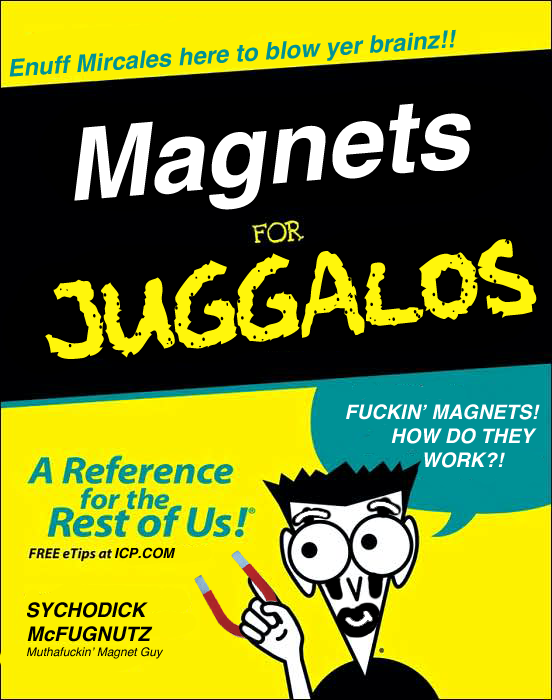
There, did you see that? Physical Perception is +reasoning ability, Mental Perception is +nerve speed. I’ve looked at that for a long time and it still makes precisely no sense to me. F***ing Perception skills: how do they work? Oh, and the text doesn't appear to match the formula. Either I fail reading comprehension forever, or GDW editing *derp*artment knocked off early and went to the pub again.

Riding or Boating - You get one, usually horse-bothering. Riding skill level is SECx5 again (Nice nod to the old cliche of toffs born in the saddle, while plebs grub in the mud). You get to add your PMCap (trans. "strength") if you’re a roughdy-toughdy outdoorsy Physical vocation type. Boating is included as a substitute skill for seagoing types. Characters get this skill at PMCap+PNCapx0.5, because sailing is an all-classes pastime dependent upon actual ability.

Trade Phoenician - which is Mythus Common. Humans get this, non-humans don't. SECx3+MMCap.

Non-Human universal skills are slightly different. They don’t get Trade Phoenician, but instead get one of three types of Nature Tongue. Cue Frankie Howerd arching eyebrow meaningfully. Choices are Fair, Hob- or Goblin; which are basically sparkly pixie alignment languages. The pointy-eared and iron-afflicted* contingent also get to speak the local language of whichever place on Aerth their folkloric origin equates to. I assume this means Redcaps speak Scottish, Djinn Arabic, Trolls Norse, etc.

* Bet there are rules for this later. Betcha. Is folkloric.

Additional HP K/S Areas
As well as your ~20 vocation skills, and your 5-6 Universal skills, your alter ego also gets some free-pick extras. You get a number of skills for each Trait determined by your total score in that Trait, plus one extra pick for your vocational Trait. All these extra skills are at 2d10+Attributes.


This also makes a bit more sense of the inscrutable Trait Limitations to Heka-Generating K/S Areas table we encountered a couple of weeks back. I’ll resist the urge to bang on about layout and organisation again; just take that particular rant as read.

The rest of page 97 is a worked example, which is helpful. And then there’s an odd little optional rule that humans - and only humans - can choose /not/ to take their vocational Trait bonus skill but instead split 2d10+highest Attribute in that Trait points between existing skills. Fair enough, but the condition that you can only spend 2-6 points per skill seems simultaneously tight-fisted and arbitrary. That's at best 1-roll-in-20 you'd make that you'd otherwise fail.

Urge to rant... rising...

Flipping rapidly over to Page 98, we're introduced to K/S Sub-Areas. "Oh goody", they cried, "because the Advanced Mythus skill system simply wasn't crushingly comprehensive enough already". The whole sub-areas thing is exactly as nitpicky as you imagine it. This is Advanced Mythus on a crystal meth/nitrous oxide cocktail; going above and beyond, into positively goatsean levels of anal retentiveness.

You get sub-areas to each and every skill you have according to the following table:

Working out your skill sub-areas is going to involve a *lot* of page flipping, given that the comprehensive skill rules cover 64 pages of dense text (pp137-201).

We're also offered two optional rules regarding K/S sub-areas:

The first of these is specialisation. Spend two of your K/S sub-area slots on a single sub-area and you get 1.5x the normal skill level. But - and here’s the kicker - all your other skill sub-areas drop to half normal. Yes, that's right. All. Of. Them.

Talk about paying twice. Even the AD&D Unearthed Arcana fighter didn't get hosed that hard! Sure, he was outdone at his niche by a bunch of newer, shinier classes, but at least UA weapon specialisation didn't make a character vastly clumsier with every weapon in the world other than his one favourite.

It’s graciously conceded that when you get to 51+ in a skill you’ve elected to gimp yourself specialise in that you can then pick half the sub-areas you know and use them at full ability. Ooh, how generous. So instead of a knee to the balls and a kick to the head, you will now only be kicked in the head.

I sincerely wonder if that little rule was ever used in play, or even playtested in a meaningful way.

The other option is to delay choosing K/S sub-areas until you actually choose to use them in play. So you get to sketch in your character's base skill, then draw in on more detail about exactly what parts it he's good at as you discover you need to know things. This would be kinda cool -- if there weren't so damn many skills in Advanced Mythus.

Bitching aside, the latter of these two rules might actually have some use for new players in a 'skill rules, but only kinda' game like AD&D or full-fat BECMI.

Consider the following hypothetical: poor confused newbie player gets skill slots, but has no idea what’s going to be useful. Fair enough. The GM rules that newb doesn't have to pick a skill until they decide what they want to be good at during play thereby enabling player agency/awesome. That’s a good rule even for experienced players who a) don’t know the GM’s preferred play style, or b) don't know whether the campaign will be all dungeon-crawling, all ships, all city adventures.

An actually useful suggestion in Mythus? Well paint me purple and call me Shirley!

Pages 99-100 are tables of all the skills in Advanced Mythus, divided up by Trait and complete with their Attribute calculation equatiomabob. Simple page references to these tables would have saved bags of space (about 6 pages or so) in the Vocations section. There are a grand total of 60 Mental skills, 48 Physical and 37 Spiritual in Advanced Mythus, which is... erm... many in total. More than I could possibly care about. And don’t forget that you can take certain skills - Jabber Foreign Moonspeak, for example - more than once.

Page 101 is a list of 76 languages of Aerth, intended for use with the aforementioned Speak Slowly and Loudly at Johnny Foreigner skill. The list is in alphabetical order, which tells you precisely nothing useful about what's spoken where. The entire list of glorified auslander gargling noises is a right mess, with Brythokelltic being somehow distinct from both Kelltic and Kelltic Dialect, and Deutsch being somehow different to Francodeutsch, Boideutsch or Neustrian. There are also four Atlantean and five Lemurian languages, but we're told nothing about them.

Oh, and a lot of the languages have an additional Dialect option, so that, for example, Soumi (Finnish?) is distinct from Soumi Dialect. I have no idea why this is the case, and no explanation - or even reference to one - is offered. By contrast with the needless dipthong-bitching fiddlyness of the European languages most of West Africa appears to speak one generic 'Beniyorob' tongue (no subdialects).

And that's enough to bring on the red mist. So here's our now customary ‘fix Mythus with a red pen and some common sense’ aside:

Your 'umble scribe would have done the whole languages fustercluck a bit differently. Very differently in fact.

See, my way of doing it would have been to divide languages up by culture area (Christendom*, Greek ecumene, Persia/Araby, Aztec Empire, Cathay, Atlantean domains, etc). Each culture area would have a hegemonic (literary/legal) language, a regional trade pidgin, some scholarly/arcane tongue(s), and a slack handful of local languages/dialects in which the local peons gibber to one another. Anything else is just outright foreign babbletalk.

*  or nearest Mythus equivalent: Greater Frankish cultural area or sommat?

Here's a historical example of what I mean:

Roman Empire
Hegemon language:
Latin
Trade pidgin:
Greek
Arcane:
Etruscan, Egyptian, Minoan
Local Languages:
Oscan, Spanish and Gallic dialects, German dialects, Rhaetian, Illyrio-Moesian, Macedonian, Aramaic, etc.

See, by limiting things like this you can still have 1,000 languages in a game world, but starting characters only need to pick from a shorter local sub-list. That way you get both the benefits of a fantasy-style common language ~and~ the point-and-gesture language barrier thing, as well as the entertaining (and authentic) historical experience of two educated foreigners communicating via literary quotations in a third language both known mainly from books.

Heading outside your usual culture area? Spend some points to learn the lingo, or get a native guide.

/end aside on languages done right.

The next table on page 101 gives us a dozen Phaeree (non-human) Languages. This one is a masterpiece of gygaxian specificity sans any kind of useful context. Apparently Drowish is distinct from both Elvish and Trowish, and I have no idea what Slaughite is and why it is distinct from Goblintalk. We are helpfully cautioned that the table is incomplete. *eyeroll*

Our last language table is Ancient, Arcane, Dead and 'Lost' Languages. It has the usual suspects: Ancient Greek, Latin, Sumerian, Vedic, as well as some intriquing oddities like Arachnidean, Arcane Magickal, Etruscan, High Atlantean, Lemurian Pictogram, Unknown Tibetan or Y'dragi Runic. Nicely evocative. Could be worse.

Section 5: More Heroic Persona Data

This is pages 102-111. Lots of tables and -- would you Adam and Eve it! -- some actual potentially useful stuff for a non-Mythus game. I'm gettin' that celebratory Finnish folk-rock feeling!

Page 102 repeats the rules for Attractiveness we encountered in Mythus Prime. Apparently the maximum for HPs is 18, even though the 2d6+8 die roll gives you a 12-20 range. I find myself having trouble caring about that particular caveat, and hope you’ll concur. Advanced Mythus does add an Inner Beauty/Ugliness rule, which modifies apparent attractiveness of NPCs, sorry, Other Personae, by +/-5 (roll d10) based on their character and moral/ethical qualities. This is a complete reversal of D&D, where Charisma is the big deal and Comeliness the raggedy-arsed poor cousin afterthought.

Next is Joss, which is clarified as being pidgin english for "deus", and not at all a reference to Mr Buffyverse. Joss is generated on 1d100, with roughly equal chances of 2-14, 14 being the absolute maximum anyone can have. The rules covering the use of Joss in play are elsewhere entirely, but I expect they'll be pretty much standard Luck/Fate Points.

What a minute. Did I just see some sly gamer humour in among all the dry-as-dust lecturing?

Birth Rank sounds as dull as ditchwater, and largely is. Which child in the family are you? *yawn* The exception is the "7th child" rule, which is the kind of funky 'roll, and get lucky, maybe REALLY lucky' thing Jeff Rients might come up with. I've reproduced the full-page table below, mainly to save myself from having to describe the damn thing:


You’ll notice that 7th children are the commonest type of Low Class HP, but are massively rare in the Upper Classes, which totally fits with both folklore and medieval demographics. The middle classes produce a disproportionate percentage of adventuring 3rd children (likely sons, given that gamers are 90% male). Again, in keeping with folklore.

Actual mechanical benefits of Special 7th Snowflakism are underwhelming. Plus 1-3 here or there doesn't mean d*ck in a percentile system, it’s less than a rounding error FFS.  This is a bit of a shame, as Advanced Mythus almost displayed a flicker of mechanical character for a second. And then it died aborning, strangled to death by a spreadsheet.

Pages 104-105 are entitled Background and Quirks, although the vast majority of the spread is taken up a sub-section on determining character age and how it affects Attributes, Skills, Attractiveness and Finances. All I can say about this is: picture the AD&D age categories rules; now imagine someone laughing at them for being pathetically imprecise and unscientific; now imagine that person was an actuary in his former life. Yep, pure fantasy heartbreaker; almost a send-up of gygaxian simulationism.

There's a mildly irritating footnote to the gains/losses by age table which specifically rules that civilised people get 20% more bonus skill points per age category than primitive types. Again with the "householders are superiah!" snobbery Gary? Your fixed-abode-centric rules make Conan, Genghis Khan and Hiawatha saaaaad.

Quirks (Knacks and Peculiarities)
Page 106 is two columns of *blah blah* about giving characters unique identifying details. It's recommended that you give with one hand and take with the other, balancing each minor benefit with a corresponding disadvantage. Cited is the example character having a minor sixth sense for impending danger, but an old jousting wound "...(because his sixth sense doesn't help when he is already in a dangerous situation!)." This has actual mechanical benefits in the game:


Holy crap! A slick, simple rule you could actually extract from Mythus and use in an old school game without instigating a violent revolt at the table. "Woo hoo! We’s partying now Leeroy! Pass that thur jug o’ pinecone liquor ma way!"

The only other thing worth looking at on page 106 is a pretty sweet Daniel Gelon pic of an Egyptian-looking wizardy guy and his lion? jackal? sidekick. In all seriousness, the b+w art in the Mythus book is (IMO) far superior to the full-colour plates. There’s probably a lesson about quality content trumping perceived style in there somewhere.

No crackle of lightning bolts, no wall of action, 
and no lunging monsters on the ‘roids: 
still better than 90% of contemporary fantasy art.

Pages 107-108 are two full-page tables of example Quirks (Advantages) and Counter-Quirks (Disadvantages). Most quirks are pretty trivial, things like +/-1 to a particular Attribute, +/-5 to a skill, or non-mechanical stuff like "good orator", "cheapskate" or "can't swim". Some are more significant: "Non-magickal: 20% Heka doesn't affect character", "Lie detector", "Anti-Midas Touch" (income 10% normal), 'hated by all animals' and 'halved healing rate' leap off the page at first look. These tables are potentially useful if you like random traits in your games.

More actual usefulness?! In terms of what has gone before we are currently mining a motherlode of usable information. Let’s see if we can’t keep this roll of joyful sozzlification going.

Pages 109-111 are Instant HP Information Tables. These cover all sorts of character details you might prefer to roll, rather than agonize long and hard over:
  • handedness - 75% R, 20% L, 5% ambidextrous,
  • background - job before becoming an adventurer. 9 tables, by SEC,
  • political beliefs - anachronistically 20th century,
  • religion - everything from agnostic to acolyte of Gloomy Darkness,
  • general personality - cool and casual through to crazy, wild,
  • degree of conformity - radical, fashion-chaser, outcast, etc.
  • general interests - travel, music, lore, politics, etc.
  • more Quirks - generally more powerful than the earlier tables, effectively mini-superpowers/curses. Strictly GM option.
  • race - five races: Black, Brown, White, Red and Yellow, each with more local sub-groups.

Handy, albeit nothing dazzlingly novel. I'd say that's a two-finger drink, based on the *might* use it in game if all other books are in storage somewhere factor.

And that last table may be... let's just say 'problematic' to modern sensibilities. Yes, people look different, and yes, there's precedent in pulp and adventure fiction - especially the older stuff - for dividing fantasy world humanity up into capital-'r' Races. But it does jar somewhat to see the word race used in this context in a fantasy game written only 20 years ago.

I dunno, maybe I'm being oversensitive about this. Have a look and see what you think:


I'm not sure what EGG was thinking here: is Aerth a semi-melting-pot world? Do certain races find themselves more prone to adventure and exploration? Who knows, there might even be 'sunstroke/vitamin D deficiency by biome' rules deeper down the Advanced Mythus rabbit hole. We're given no explanation of course, just a big, fat hostage-to-fortune to anyone willing to take offence.

EGG: unwitting racist, or simply hardcore 'simulation uber alles' product of his time and reading preferences? Knowing what we know of the man I'd honestly have to go with option 'B' (rather than option /b/tard). I think this table was just a case of perfectly innocent "It's a fantasy game; not a political tract" creator naivete.

And, with that last little bout of pidgeon-catting, we say finis to this sacking-and-looting spree on sections 4 & 5 of character generation in Advanced Mythus. Surprisingly undepressing really, although how much of that is down to it being an unseasonably sunny spring day here in Blighty is undetermined. I counted at least four possible takeaways from this section; which is - I think, it's all a little hazy right now - more than in the entire rest of the book so far!

Good news Mythus. It appears we will not require the services of famously placid Scotsman David Hume this week:


Next Time: we brave the sixth and final part of Advanced Mythus chargen: Heroic Persona Resources. That's money, contacts and gear, all in EGG's inimitably specific style. And - given that most of that section is equipment tables - we might even make a start on Chapter 11: Core Game Systems.

Pic sources: Dangerous Journeys Mythus rulebook, Ryan Dunlavey's Action Philosophers

Saturday, 2 July 2011

Small But Vicious Dog Steals Hearts, Humps Leg

Remember that ill-advised B/X-WFRP hack I wurbled about a couple of months back? Done (apart from the last few magic item and monster descriptions).

All the other WFRP-ish goodness - drugs, diseases, insanity, mutation, gunpowder, chaotic magic, dorfs with mohawks, hot pies, giant angry puffins and so forth - is in there. Heck, I've even included rules to model that special WFRP "gods hate you; failure is law!" atmosphere.

Have a download, see what you think (critique and comment welcomed and appreciated):

Small But Vicious Dog ver0.3: Cover and Contents page
Small But Vicious Dog ver 0.3: The Gubbins

Also useful:
Chaos Mutations compilation by Andrew Fawcett

Small But Vicious Dog is dedicated to:

Erin "Taichara" Bisson for giving me the idea with the FF Red Box Hack,
Owen "Coopdevil" Cooper - the psychopomp of the Brit OSR,
and
Kelvin "brainsplurge" Green for mooting the idea of a B/X-WFRP modcop in the first place.

Oh, while I was pecking away at SBVD I discovered Warheart, a WFRP-style mod for the d20 system. It's pretty cool, but you can't call it a *proper* WFRP clone: there's no ratcatcher career FFS! *Tsk* Schoolboy error.

Tangentially related: Seeing as my long-time favourites the Fimir are finally getting some love (both from the grassroots, and from the Evil Empire itself*) after 20 years spend in the Squat Zone, you might be interested in this: Mr Saturday's Fimir army for WFB.

-----

* GW shamelessly mining their old IP instead of having a single new idea? Nah, never happen. ;)

Friday, 8 April 2011

Knocking the Thief on the Head, Again

"Hide in shadows? Find/remove traps? I should cocoa!"

This was partially inspired by the "naked warrior" idea that has been doing the rounds (hat-tip Aeons & Auguries and Mythmere), and partially by Taichara's FF Red Box Hack.

For a while now I've been desirous of killing off the thief in my Labyrinth Lord games. Sure, I like having sneaky, acquisitive reprobates lurking about the place as much as anyone. But having a dedicated sneaky trapspringer just treads on too many toes for my liking. It kind of leaves the demi-humans as walking detection arrays that *ping* potential hazards, but then sit back to let the skinny human with no obvious career skills deal with them.

In my ideal (game)world everyone from the fighter to the wizard to the grotty little halfling would be taking their turn climbing sheer walls, lunging from the shadows and/or trying to unpick that lock as the walls closed in. Sure, characters would still have their own specialities, but there wouldn't be a general attitude of "send in the canary" as soon as the party bumped into a location where Trap come up on the random stocking table.

That said the light-armed, Dex-focused combatant niche in D&D is a flavourful one. I'm sure you can name as many cool fantasy thieves as I can, and - let's be honest - in D&D terms any character played by Errol Flynn or Harrison Ford was a thief.

But (and here we leave the blahblah behind) why not get rid of that jobsworth-ish little "Can't do that. Niche-protection innit squire..." oik and make 'fighting in frilly shirt' a function of the fighter class?

Check out the thief write up from the Labyrinth Lord book:
"...thieves cannot wear armor heavier than leather, and they cannot use shields. They have a need for using diverse weapons, and are able to use any kind."
-- LL, p12
Once you get away from the strict "fighter = knight in shining armour" archetype that actually sounds pretty fighterly to me. Everything from Celtic warriors to Shaolin monks to Zulu warriors can fit into the light-armoured fighter archetype.

Knock off the thief and your 'man who pushes sharp objects into people' can suit up as either:

a) the classic heavily-armoured lumbering tank, or
b) a deft nuisance in light armour with a rapier and a winning smile.

The game maths seems (based on my back-of-an-envelope calculation) to stay roughly in balance if you take certain factors and edge cases into account:

Backstab
Limit this to "while in light armour" only. Deft fencing moves and opportunistic shankings aren't really possible in 40-60lbs of ironmongery.


Armour Class Disparities
Level 1 str fighter = chainmail, shield, Dex 13 = AC 3
Level 1 dex fighter = leather, Dex 16 = AC 5

Level 10 str fighter = plate +2, shield +3, Dex 13 (+1) = AC -5
Level 10 dex fighter = leather +3, Dex 16 (+2) = AC 2

Note: these raw numbers are exclusive of any wacky gear the character may be packing (like cloaks of [displacement/the mountebank/shadows], rings of invisibility, oils of etherealness, etc.)

So over the course of his adventuring career Captain Tightpants has fallen a bit behind Sir Slashstab in the "Agh! Not the face!" stakes. How about allowing the light-armoured fighter a class-ability bonus to AC?

"I'm Not Wearing Any Pants!"-jutsu
Light armoured fighters gain a non-magical bonus to their AC based on their level. From whence does this bonus derive? Same place as the incidental music, the perfectly tailored costumes and the energy used to power all the wizard's FX. :p

1-3 +1
4-6 +2
7-9 +3
10+ +4

This per-level AC bonus idea was introduced to reduce the likelihood of the lightly-armoured Dex-fighter bogarting all the bracers of armour and cloaks/rings of protection the party might happen across. The implementation was ripped off partly from the BECMI Mystic, partly from the much-maligned 3E Swashbuckler class (which actually works pretty well in Classic D&D).

Mesh with the LotFP-derived thiefless dnd skill rules (2 dots/level (2/level after first if front-loaded demi-human), divided as the player sees fit), or just ability checks, for great simplification justice.

Read language/use scroll? 
Throw those in as another Xin6 skill option if you like. Possibly with a minimum level requirement. If it's good enough for Red Kane and the Grey Mouser...

-----

Semi-New Labyrinth Lord class

Swashbuckler 
(or Barbarian, or Shaolin Monk, or Action Archaeologist, or Warrior Nudist of the Cult of Vallejo, or...)
Requirements: None
Prime Req.: DEX
Hit Dice: 1d8
Weapons: Any
Armour: Leather only, no shield.
Attack: as Fighter
Saves: as Fighter (or Thief, it really makes no odds...)
Advancement: as Fighter

Special Abilities:
  • Backstab (as LL Thief class, requirements as SRD Rogue Sneak Attack ability)
  • AC bonus (+1/3 levels, non-magical)
  • Cleaving Strikes - drop enemy, attack again (as Dave Arneson's house rule)
  • Some sort of acrobatic antics ability. I'm thinking reduced difficulty penalties to Dex checks or something. Something better than this derptastic mess..
I'm not sure whether Cleaving Strikes and Backstab should stack. My sense of good taste say no, but my Ninja Scroll-loving inner munchkin says yes.

-----

Yeah, yeah. Reinventing the wheel again. A simple AC tweak would do all this and more. S+W and Carcosa sit there saying "Oh hi. What kept you?" Etc.

Pic Source
Errol Flynn as Captain Blood (F17/T10/Cl8 my Aunt Fanny!) from Devilish Pictures blog

Monday, 28 February 2011

Inheritance and Dynastic Succession in Classic DnD


Henry 1/8: "One day kids, this rainy island full of sheep 
and short-tempered drunks will be all yours."
Junior Tudors: "Erm, yay?"

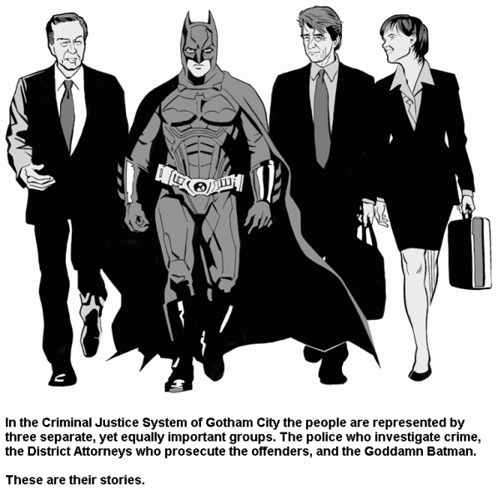
Q: How do you get hereditary dynasties (even short-lived ones) in a world where killing fools and taking their stuff doesn't just make you an infamous serial killer, it makes you The Goddamn Batman? How do you stop the first King Conan wannabe from waltzing in and kicking your designated successor off the throne his dad worked so hard to acquire?

A: Let's say, for the sake of argument, that a character has effectively 'won' Classic D&D.
He's 10th level or so; rides around on griffon-back wielding a sword of fire, a lance made of lightning and a bow that shoots homing piranhas; and has a fine castle full of swag, blow and harem girls in the midst of an rich province sitting at the heart of an extended network of friends, allies and trade partners. It'd sure be nice for the character to be able to pass this on to a successor of his choice, rather than having all that hard work fall prey to the first gang of lean-and-hungry murderous hobos to wander along.

Well, the wise fathers of our game - as with so much else - already had the possibility of ensuring a bit of dynastic continuity within gameworlds covered. Behold! the Henchmen and Inheritance rules of B/X D&D. 

When Junior (be he lineal son-and-heir or favoured apprentice/acolyte) comes of age his father/mentor/patron can use the rules on acquiring Henchmen to (NPC Reaction Check permitting*) designate Junior - a well-bought up boy who's had the advantage of the best training that unlimited money, favours and fear of magical retribution can buy - a bona fide henchmen in good standing, with all the benefits and appurtenances thereof.

*  all those disgruntled "I'll make my own way dammit!" noble sons adventuring incognito, thieving apprentices who steal spellbooks, and neophytes suffering crises of faith have to come from somewhere...

Pops can drag Junior off on a few ‘bonding with the old man’ adventures, doling out 50% “turning up and holding the torch” XP to the young'un as he passes on those hard-learned wyvern-wrangling and vampire-ganking techniques.  Heck, it he wants to be all Edward III about it Pa can just sit back to “let the boy earn his spurs” as a {knight/wizard/priest} errant, likely garnering full XP from his time in the finishing school of hard knocks. Rinse and repeat a few times and when the gaffer finally decides to jack it all in and (*ahem ahem*) retire to a monastery Junior is already man enough to stand up for himself against the local troublemakers.

Per the Inheritance rule, Junior then pays the customary 10% inheritance tax (either as tribute to the local overlord, or bribes to the neighbours and followers) and inherits dad's gear and title as Lord Warden of the Spongmires free and clear. Thanks to his foresighted old man, the new lord of the manor has the personal clout (i.e. levels) and reputation to back up his newly acquired title. Instead of being some 1HD eggshell armed with a hammer the rightful heir* can use all the sweet adventuring gear he's inherited without the danger of some bandit chief lucking into asymmetric power by doing a William Rufus on him.

* for a given value of 'rightful', seeing as all political legitimacy in D&D-land stems directly from personal power. One man's "rightful heir" is invariably another's "spawn of the vile usurper"...

And that, dear readers, is why - contrary to expectations - you rarely find a mere F1 as lord of that castle that just hove into view, and why death in harness among the land-holding classes only rarely ("Like, less than 50%: hardly at all really...") sets off a frenzy of internecine war and backstabbing.

(Inspired by Keith and Frank's thoughts on dynastic inheritance in 3E.)

-----

JOESKY'S LAW compliance content

Divine the Ancestral Will (Arcane Spell)
Level: 2       Dur: see Speak with Dead
A restricted form of the clerical spell Speak with Dead. Requires rare and expensive unguents, incenses and the like.
No limit on time since death, but can only be performed in the presence of the honoured remains and/or expensive memorial of a lineal ancestor. The ancestor will be the spirit interrogated. 1in20 chance that the caster is geased to avenge some slight to the ancestor, or to perform some task to the benefit of their family line, in return for the knowledge acquired.

(inspired by the Manja ancestor worship rites from Fading Suns "Dark Between the Stars")

Pic Source
Henry VIII and his children (and his jester) from Medieval and Renaissance Material Culture site

Wednesday, 28 April 2010

Wiffling About Initiative

Further to Doug Easterly's post on initiative at Savage Sword of Athanor I'm gnawing over the old bone of who goes first yet again. It seems there are as many ways of determining who goes first as there are retro-clones...

Retro-Clones (incomplete list*)
  • OD&D (via Swords and Wizardry): Declare Spells > Initiative > Winners' Actions (spells, missiles, etc.) > Losers' actions > Held Actions.
  • OD&D (Judges Guild Ready Ref. Sheets): Individual initiative determined by action/weapon, modified by Dexterity and movement speed.
  • BD&D (via Labyrinth Lord): Initiative > winning side Move, Shoot, Spells, Melee > losing side Move, Shoot, Spells, Melee.
  • AD&D (via OSRIC): some wild-eyed, complexity-fetishist individual initiative madness about tracking segments (or, as they're known in English, "seconds") within each combat round.
* Yes, I know I've completely overlooked Basic Fantasy, Swords & Spells, [insert game of your choice here].

Further OD&D Variations
  • OED: Initiative > Move, Shoot, Melee, Spells
  • SSA: Initiative > Missiles, Move, Melee, Magic
Other Systems of Interest
  • D20 System: Actions taken in individual initiative order.
  • GURPS Goblins: first to say "I whack 'im!" strikes soonest.
  • GW Mordheim: Initiative > Alternate turns (Move, Fire, Melee, Recovery).
  • Legend of the Five Rings 1E: Initiative > Actions declared in reverse order (lowest first) > Actions taken in order (highest first) > Blood all up the walls.
Much as I'm taken by the sheer simplicity (and the rigorous emphasis on player skill) inherent in the initiative system of GURPS Goblins, I'm currently leaning away from the 'all or nothing' BD&D/LL initiative system towards something a bit more OD&D-ish.

Stuff I like right now:
  • Team initiative (No Grandstanding!)
  • The idea of both sides acting in the same phase (winner does A, loser does A, winner does B, loser does B, etc), 
  • The idea of people being pelted by arrows before they close to melee.
So which system to nick?

PS: 'initiative' is a bitch of a word to type...

Monday, 19 April 2010

Thiefless D&D

(being some musings on simple universal skills for a D&D world devoid of the Thief class)

There's a school of thought within the OSR that holds that all D&D characters are rogues, and that the introduction of the Thief class was the beginning of the slippery slope to class 'role protection', and ultimately to the detriment of the game. OK, then. Why not gank the thief archetype and divvy up his stuff (notably thiefly skills) up among the remaining classes?

Here are my half-formed thoughts on the matter:

Standard Dungeoneering Skills (retained as is)
Hear Noise1 in 6
Find Traps1(+Int) in 6
Find Secret Doors1(+Int) in 6
Open Doors2(+Str) in 6
Surprise2 in 6


New Universal Skills

Pick Pockets0 in 6
Move Silently0 in 6
Hide in Shadows0 in 6
Pick Locks0 in 6
Remove Traps0 in 6

All characters add +1 in 6 chance to any two of these skills at each level gained.

Above 5 in 6 you have the "5+1, 5+2..." house rule (note: I'm afraid the originator of this escapes me, but the rule basically allowed a 2nd roll at "+n in 6" if the first die came up a 6). Possible skill level maxes out at 5+5 (~97% success rate). There are no sure things in the dungeon...

Non-humans
They keep their special racial rules.
DorfsDetect Slopes/New Construction/etc2 in 6
RatlingsHide in Woodlands5 in 6
ElvesHear and Sniff Secret Door+1 in 6

Why have I bothered with this? Well, it lets your Fafhrd or Grey Mouser types mcgyver things, root through other peoples' pockets and lurk in the shadows all noir-like without the players and DM having to resort to games of "mother may I". Conan and Kull get to sneak up on the villain, rather than blundering about like heavy-footed fools. Gord? He's a fighter type in Elvish Chain who uses Akrasia's weapon schools house rule. ;)

Backstab? Thanks to your newfound ghost-footed 1337 ninja sneaking skills you probably have surprise. Make the first hit count!

Thoughts? Objections? Contempt for my mechanics fetishism in a player-skill game?

(picture credit: Jollyjack)

Sunday, 7 March 2010

Glass Cannons and Meat Walls

(Some half-formed thoughts on variable monster HD)

Normally I'm a devoted adherent of the hp as combat fatigue school of thunk. Coming from a WFRP background the idea that you only need to land one mortal blow just seems intuitive to me. But what about the worldview that deems hp to be a measure of tissue damage? I was thinking about this in the light of some recent musings on the old Monster Manual II ("All storks, all the time"), flavoured with some idle speculation about Tao of D&D Alexius' ideas on why whales are unkillable unless already beached (that whole pre-modern whaling industry; never happened), and on Jo Bloch's currently-in-development labour of love Gygaxian AD&D 3E speculato-clone Emprise (huh, I thought we already had Hackmaster? :) ).

I'll come to my main point via a digression if I may.

[tangent]
In the beginning was OD&D, and OD&D gave us the unified damage mechanic. Weapons all did d6 damage, all hit dice were d6. And, for a time, it was good.

Then came Greyhawk, and in its train came variable weapon damage, d8 hit dice, and x+y notations for HD (you know, roll so many HD, and add a flat number to the total. Enhances survivability, and bumps the beastie up a row on the hit matrix). All good stuff, for a given value of good. x+y HD notations are fine and logical for something like a bugbear (3+1HD), and, sure, what's wrong with a Balor having 8+8 HD? That's +1hp/HD on what should be a proverbially hardy monster; where's the harm in it? A Con of 13 gets you the same...

And again, for a time, it was good.

However, by the time AD&D was in its pomp, use of the x+y HD notation was getting a bit OTT (as things are oft wont to do when excess is not curbed by punkish iconoclasm). By the time the FF & MM2 were published something downright odd was going on. Hit Dice had become divorced from both monster power (special attacks, SLAs, monsters as casters, etc.), and from durability in a 'knock down, drag out' fight. Hp boosts were being used as a 'virtual HD' mechanic, giving a bonus to survivability against hp damage that didn't boost attack matrix placement and saves out of whack. Fine, except that sometimes these bonus hp almost outweighed the hp derived from HD.

Presented for your consideration, a few choice examples of the phenomenon:

+1 hp/HD
Hollyphant 9+9
Yagnodaemon 13+13
Shedu, Greater 14+14
Verme: 18+18
Shadow Dragon N+n (on top of their screwy dragon hp figuring rules)
Elemental Grues (all bar one) N+n
Heirarch Modrons (all) N+n
Foo Creatures N+n
Pedipalps, Scorpions, Solifugids (all) N+n

+2 hp/HD
Swan 1+2
Elfin Cat 3+6
Taer 3+6
Saltwater Troll 6+12
Moon Dog 8+16
Derghodaemon 11+22
Ultrodaemon 14+28

+3 hp/HD

Nycadaemon 12+36
Arcanadaemon 13+39

+4 hp/HD
Tri-Frond Flower 2+8
Ju-Ju Zombie 3+12
Deva (all) N+4n
Hydrodaemon 9+36
Mezzodaemon: 10+40 HD

No longer could you glance at a single number and see that this beastie would have - at least on average - so many more hit points than that one, or that these two nHD monsters might both be equivalently dangerous to the party. The clear correlation between hit points and damage (one sword hit = one hit die) had been entirely lost. A fundamental part of the primary purpose of the HD system, and a useful DM tool, discarded thanks to system bloat.

And it got odder. Some monsters appeared to have had pointless additional hp doled out to them for no good reason at all. I'm trying to imagine exactly what had made the writers so adverse to having to write a single lonely number in the HD row of the monster entry. There was just no perceptible rhyme or reason to it.

  • I mean, would it really have destroyed the conceptual integrity of the Behemoth (a big mundane hippo) to change it's HD notation from 10+5 to 11? Or the Polar bear from 8+8 to 9HD?
  • Likewise with the Firbolg and Fomorian giants. What earthly use is an extra +1-3hp to a 13 HD melee monster? A simple +1, yes. That bumps a monster up the hit die matrix. But +1-3?
  • Similarly, if someone can explain to me how a Drelb is at all enhanced in any meaningful way by having 5+3HD, rather than 5+1, I will put one thing of their choice into my mouth.
  • The bizarro rolls on with a Giant Firefly by having 1+4 HD. ("Pourquoi?" "Parce que! Silence!")
  • Ditto the Twilight Bloom with its lolrandom, but oh so Barrier Peaksy 3+8HD.
  • As for the Giant Dragonfly: 8+1-8HD. The logic entirely escapes me. To any non-Martian that should just be 9HD.
  • When a typo omits the '+' you get the nigh-unkillable 43 HD pyrochicken (hat-tip: Jeff Rients).
  • And the Alu-demon write-up. Well that's just a mess: 6+2 to 6+6 (4-24 for Con bonus, if applicable). "Hurh? Rhot the ruk Shaggy?"
All this fiddly madness, seemingly just to preserve the sacred cow that monster hit dice must only ever be d8s. An orthodoxy that has a notable exception within the very book that offers up most of this strangeness: the Yochlol, d10 hit dice.

"FFFFUUUUUUUUUUUUUUUUUU-!!!"

(deep breath)
[/tangent]

That refreshing little rant about the deficiences of an excessively baroque system aside, we come to the actual substance of this post. Variable monster HD in Labyrinth Lord, and why the very idea is not a catastrophic blasphemy that'll bring it all crashing down around us.

There's Gygaxian precedent for it, so this is hardly filthy 3E-infected innovation for the sake of it. According to our esteemed Greyhawk Grognard EGG's own wishlist for a Gygaxian 3E included variable monster hit dice. I imagine these would have worked in a not-dissimilar fashion to the ones eventually b0rked into existence for WOTC's 3E: base HD by type, plus additional hp per HD based on creature type, physiology and whatnot.

The relevant quote is:
I say that as barbarians get d12 for HPs, then clearly extrapolation of the same principle must apply to large and vigorous creatures. This mitigates the potential increase in PC prowess. As a matter of fact, adult critters were assigned 7-12 HPs per HD in my AD&D campaign--have been given the same in what I have designed for the C&C game system. Also, with increase in damage due to Strength, all large and powerful monsters, including ogres and giants, gain a damage bonus equal to their number of HD.

Admittedly, this is not in the UA work, but it logically follows, and would have been included in the revised edition of AD&D that I was planning.

“Actually I planned to go through the monsters' roster and re-assign HD types--d4, d6, d8, d10, and d12. While doing that in regards to the HPs of each type, the monsters' chance to hit based on number of HD would not be affected.

As too often "weak" monsters were randomly generated, I also planned to have robust adults possess HP totals of something over 50% of the possible maximum by using a HP generation system such as 3-4, 4-6, 6-10, 7-12 using the appropriate die to determine the actual number generated--d2, d3, d5, d6. Non-robust--immature, old, sick, injured, or even non-physically active sorts such as spell caster--monsters would have the obverse HP range using the same type of die without addition.

(source: AD&D's Lost Second Edition)

Hmmm. You know, that makes a little more sense of the HD oddities in the MM2. If only Uncle Gary had taken the time to explain the shift in his reasoning. A simple footnote in the introductory section of the book would have done. Oh well...

Some purists might rage and fulminate against any hit die that isn't a d8 (or a d6 if you're an OD&D arch-purist), but ~if~ hp are read as tissue damage I can't see why variable hit dice types (sans the full-on "and us too" madness of "HD: N+eleventy-three-and-a-half") mightn't work. A large, burly monster should be able to shrug off more bashy-bashy damage than a small one, that's just intuitive. Problem is, just adding more HD in D&D also boosts "not directly related to withstanding pummelling" stuff like hit probability and saves. So, between the AC system and fixed HD, there can be no big-but-clumsy meat wall monsters, no fragile-but-slippery glass cannons.

Here's my modest proposal.

1. Base HD are determined by monster size.

Easily done. There are notes on how big beasties are in their descriptions, and AD&D 2E had a handy little monster size chart that divided creatures up by degree of HUEG.

SizeHDExample
T (less than 1')1hp/HDPoxie, housecat
S (1'-4')d4 (av 2.5)Kobold, giant shrew
M (4'-7')d6 (av 3.5)Human, black bear
L (7'-12')d8 (av 4.5)Ogre, horse, cave bear
H (12'-25')d10 (av 5.5)Elephant, giant
G (25'+)d12 (av 6.5)Dinosaur, whale, purple worm, roc


2. Base HD are modified by the type of monster, or by character class.


Swarm/yard trash monster= -1 shift
Spindleshanked Fairy Race= -1 shift
Barbaric or predator race= +1 shift
Harder than meat (made of wood/stone/iron)= +1 shift
Demon/Dragon*= +1 shift
.
Arcane Caster (W, E)= -1 shift
Warrior Class (Dw, E, F, 1/2) = +1 shift


* Dragons get an additional fillip to their HD type because, well come on, they're still the iconic antagonists of the setting. Even a dinky little St. George ganks a half-grown crocodile dragon should be as tough as old boots and require substantial tenderising. Ditto demons. Unnatural vitality, rock star villain status, and all that...

Worked examples

  • Giant leeches (small-sized yard trash) have 6d4 HD, rather than the 6d8 that currently makes them as tough as a rhino, a tiger, an orca, or a 20' long crocodile. (No, really. IANMTU.)
  • Halflings (small-sized, but a warrior race) have d6 (d4 > d6), as do imps (small + demon).
  • A normal human will have d6 HD. Fighters and hardy warrior race humanoids will have d8 (albeit for different reasons).
  • A large animal, like a horse or cow, will have d8 HD. A large predator like a polar bear, or warmongering and flesh-guzzling big humanoids like Ogres and Trolls, will have d10 HD.
  • Huge animals, like elephants or brontotheriums, will have d10 HD. Huge "I smell the blood of an Englishman!" brutes, like giants and treants, get d12 HD (d10 for size + being hardcore/carnivore bonus).
  • Gigantic "Leg it lads!" stuff - dholes, purple worms, T-Rexes and the like - will have d12 HD across the board.
This should take little or no extra time, either in prep or at the table. Simply roll/decide hp for the type of monster as you would normally, only with different dice. You're a DM, you have dice in abundance, right?

Some example monsters


Monster (Size)LL HD (av hp)Mod HD (av hp)
Purple Worm (G)15d8 (av 67hp)15d12 (+2/HD = av 97hp)
Triceratops (G)11d8 (av 49hp)11d12 (+2/HD = av 71hp)
Elephant (H)9d8 (av 40hp)9d10 (+1/HD = av 49hp)
Cave Bear (H)7d8 (av 31hp)7d10 (+1/HD = av 38hp)
Fighting Dog (S)2+2 (av 11hp)2d6+2 (-1/HD = av 9hp)


This variant would allow all the PC classes, and most of the iconic monsters, to retain their normal HD, but it also gives you proper meatwall monsters (rocs, dinosaurs, whales, etc.) which don't have insane combat skills or beefcake saves. It also offers the option of including spindly-boned glass cannons - like middling HD faerie creatures - which (IMO) ought to have decent saves and hit chances to go with their sneaky tricks, but should squish good and proper when you finally manage to lay a glove on them.

I know, I know. This is the antithesis of the elegant simplicity of OD&D/EPT, where both hit and damage dice were *always* d6 and the world makes clear sense. But when you've already got variable damage by weapon size (as in LL), why not go the whole (demon)hog and have variable monster HD?

Thoughts? Objections? Reasons I should have my fingers broken for tinkering with the exquisite balance of the B/X-LL mechanics?

Tuesday, 19 January 2010

The Reaction Table: My New Best Friend

(Cor! Is it dusty in here or what?)

The BD&D reaction table, oh how I love thee! Useful for recruiting hirelings, or for parleying with monsters; all (demi-)human life is contained within this simple little labour-saving 2d6 table.

2Friendly, helpful
3-5 Indifferent, uninterested
6-8 Neutral, uncertain
9-11 Unfriendly, may attack
12 Hostile, attacks


The Judge's Guild Ready Reference Sheets already suggest using the table as the basis for negotiations (p37) and, given that in B/X D&D a "monster" is any creature not controlled by a player, you can use the reaction table to generate the current attitude of almost any encountered person or group.

One simple roll and you can instantly determining exactly how dyspeptic and put upon the local raise dead on legs feels today ("He said to throw the rotting stiff in the river for all he cared."), or whether the local merchant decides you're a thief ("...and then he chased me down the street raising a hue-and-cry. And I only wanted my cloak patched!"). Haggling for a better deal on that nearly new platemail? Roll on the reaction table. Want to know if your proffered "gift in anticipation of services rendered" is sufficient to allay the cupidity of the grasping court eunuch? Reaction table. Want to know how the duke reacts to your pushing for higher bounty? Reaction table.

In a hexcrawl context you can use the table to determine the current attitude of the latest hicksville (or poor, put-upon merchant caravan), towards our favourite gang of wandering killer hobos. Maybe you roll a 2, and the next village the PCs turn up at mistake them for fabled heroes and throw them a parade ("Why no, I'm merely travelling incognito."). Or you might roll a 12, and decide that the merchant's guards have mistaken their practised, woodcrafty approach for an ambush by marauding Orcs ("You cretinous yokels! Orcs are green! Do I look green to you?" "Orcs can be cunning..."). Or you could roll a 7 and have the locals be not just indifferent to the PCs, but wilfully oblivious to their presence ("It's some local tradition. We have to give them time to decide for themselves whether we're ghosts, or hallucination, or what...").

You can even use the reaction table to determine the prevailing mood of a locality otherwise indifferent to the presence of the PCs. Maybe (2) there's a general air of goodwill and jubilee because of a religious festival or annual sporting event ("Rejoice! You have joined us in time for the Gnomish Mating Frenzy!"), or perhaps (9-11) it's all just one loud sneeze away from kicking off into a full scale gang war.

Why bother? Well, mainly for the sake of verisimilitude. The chaos of random rolls help to give the impression of a larger, richer, more complex, and more carefully thought-out world than the DM has time or energy to put together. It's part of what James M calls The Oracular Power of Dice (yes, he pronounces the caps): take the die rolls, make of them what you will, and rationalise it all afterwards. Any contradictions and inconsistencies, well, that's all part of life's rich tapestry.

Oh, and for a bit of extra hilarity, there's also a separate d6 table for stronghold encounters (LL, p56) which has varying probabilities for 'chase', 'ignore' and 'hospitable' reactions on the part of the inhabitants. Combining this table with a 2d6 reaction roll can be great fun if characters rock up to castles entirely uninvited (pro-tip: "Ahem. Heralds milord."). The plot hooks write themselves:

  • Ignore + a hostile reaction: the drawbridge stays up. The peculiarly-accented residents hurl abuse and catapult cows.
  • Hospitable + neutral: the lord is obliged by his position to show largesse and is watching through gritted teeth as the gluttonous peasantry eat him out of house and home /again/. Don't expect any favours.
  • Hospitable + unfriendly: the classic 'poison feast' gambit.
  • Ignore + friendly: "Sorry, plague about, doncherkno. Have to keep the gates closed: doctor's orders. There's a pest tent down the way though..."
  • Chase + friendly: "No harm in a bit of Hare and Hounds, eh what? You be hare..."

So, yeah. A handy little innovation.

Wednesday, 15 April 2009

The Siren Lure of BECMI


♪ We will fix it /
We will simplify /
We'll divest the game of cruft ♫

Perhaps inevitably, the version of D&D I'll now be using is for the Vaults game is still going to be a horrible kludge. It'll be largely Labyrinth Lord read through the filter of Mentzer and the Rules Cyclopedia, with some elements from C&C, the SRD, my beloved Tome Series, and sundry internet lootings thrown in to taste. Think of it as Mentzer midweek leftovers curry.

I'm going to try and keep things to an almost Microlite74 or OED simplicity initially, but hopefully I'll be able to add back in some personal favourite elements as our collective comfort levels with this bizarre new world of (non-3E) strangeness increase.

What's coming from where:
  • Most mechanics from LL - Nice and simple. Simple is good.
  • Amityville Mike's skill-less skill system - 'Tis teh shiny.
  • C&C-style BAB and ascending AC - "More is better" is just more intuitive.
  • 3E three save (F/R/W) schema - I never 'got' the reasoning behind the five save system.
  • Unified level advancement rate (3E/Berin style), with traditional training costs and times.
Classes will be left per LL initially, although I'll be using Amityville Mike's advanced classes (all the fun of classes, but with that great Mentzer-ish taste) later on.

The whole weapon proficiencies/weapon mastery system will probably get kicked into touch. I'm inclined to replace the whole morass with re-jigged Tome scaling feats for fighters - pick one feat as a class ability at 1, 3, 6, 9, etc.

Funnily enough, there's a character sheet that suits what I want almost perfectly: Goodman Games fine Dungeon Crawl Classics sheet (pdf link).

Given the scads of additional time freed up I might be able to make some more progress on my How It Should Be system for Alchemy, Crafting and skill use in 3E. The more I look at it in the light of old school wisdom, the more apparent quick-and-simple fixes for that baroque monstrosity of a game become...

edit: hardcopy of Labyrinth Lord on order. The old school whirlpool is sucking me in! Don't send help. :)

"It was not a new terror that thus affected me, but the dawn of a more exciting hope. This hope arose partly from memory, and partly from present observation."
-- E.A.Poe, "Into the Maelstrom"

Tuesday, 31 March 2009

The Passage of Time - Inventories for the Lazy DM


Keeping track of the passage of game time, and of resource usage, has long been a big deal in old school D&D games. That makes sense to me as a player and referee, given that when you're in a hostile environment - be it dungeon or wilderness - it really does matter how long your torch, rations, potion of water breathing, or w/e will last. Make the wrong call when buying kit, or about when to return to the surface for resupply, and your brave adventurers can be left starving and lost in the darkness while the surly natives close in, knives and eyes a-glint and banjos a-twang.

That said, tracking each individual torch, slice of bologna, handful of trail mix, arrow or sling stone can get old really quickly, especially for newer players who've come to the game via CRPGs and such. But, to quote the always interesting Jeff Rients (posting on the RPGDiehard blog):

The nice thing is that in most D&D settings oil-measures probably aren't accurate, food portions are best guesses, and torches aren't manufactured to exacting standards.

With that sensible observation in mind I'll be cheerfully yoinking and adapting The Rambling Bumblers' Savage Bookkeeping alternate inventory system for my own twisted DMing purposes. Savage Bookkeeping is a sweet little hack for the Savage Worlds system that allows you as a busy DM to not sweat the small stuff, while still ensuring that the player keep an eye on the appropriate timers and gauges during play.

So here's my lightly panel-beaten version of the mechanic:

Instead of keeping track of every torch, chunk of chalk, coil of rope and whatnot there are now 4 levels of inventory for expendable items (food, light sources, ammo): Very High > High > Low > Out.

Adventurers, being reckless types, start out with their essentials at High unless they specifically raise them to Very High. Quite how they do this in game terms is a bit nebulous atm, but I imagine it would involve them forking out for new Microlite20-style dungeoneering Fast Packs ("The best 50gp you'll ever spend!") on a semi-regular basis.

At set periods, or in specific unusual circumstances as determined by the DM, the designated quartermaster (or just the person with the best applicable mod.) should make checks for each of the following:

  • Rations and water (1/day) - Survival or Dungeoneering check
  • Light sources (1/hour) - Dungeoneering check
  • Ammunition (1/fight) - BAB check
The DC of each check is 10 + 2 per person in the group (figure derived from the Survival skill description).

A failed check means the inventory drops by one level in that category, with the party being deemed horribly screwed in a particular department when said quantity reaches 'Out'.

Hunting, looting food stores, scavenging ammo and the like can restore depleted levels of inventory either per DM fiat, or according to the rules for the Survival skill.

Yes, the fact that higher level groups can be larger than lower level ones at an equivalent level of risk is intentional. Higher level (and thus more skilled) characters are generally more experienced in gauging logistics than are their 1st level counterparts.

So, between Delta's enc. mod and Josh's inventory hack, that's me pretty much covered for the inventory management stuff. Just throw in a quick adventuring time sheet for spell durations and the like, and that's me sorted for at least the first few Vaults crawls.

edit: It appears that I've reinvented the wheel once again. d7 beat me to this...by months.

Sunday, 22 March 2009

20th level, ho hum


“…the original D&D assumed an endgame where you would build your stronghold, acquire vassals and tenants, and become A Major Player In The World's Politics. That endgame seems to have virtually disappeared.”

-- Mike Mornard, hat tip to Sham for the quote.

One thing that 3E lacks that earlier editions of the game enjoyed is any sense of explicit, meaningful character progression within the game world. Sure the requisite components of such development are all there (level scaling abilities, ever-increasing wealth, the Leadership feat), but to someone coming new to the game there is no explicit declaration that "this is what you are capable of/should be doing at this level".

PCs have - at least by reading the rules as written - no social context beyond 'adventurer', and no meaningful benchmark of their ability to affect the world other than the system level mechanic of the Challenge Rating. As a result PCs in 3E exist, by default, in a solipsistic void. At 15th level characters are, by the RAW, just bigger, tougher versions of their 5th level selves doing the 'same old, same old' with bigger numbers (edition war flamebait: this applies in spades for 4E).

Now, back in the sepia-toned old days this sense of dislocation was explicitly not the case. Pre-WOTC D&D was divided up almost into a series of 'mini-games' (pace Keith and Frank). Although already implicit in OD&D this succession of ever-more involved challenges and potential character objectives was perhaps stated most explicitly in BECMI D&D:

  • Basic Set (levels 1-3) - Explore the dungeon. Get to understand the game rules
  • Expert Set (levels 4-14) - Explore the wilderness. Learn more about the game world.
  • Companion Set (levels 15-24) - Explore the world. Carve out and rule a domain.
  • Master Set (levels 25-36) - Explore the planes. Challenge the gods for immortality.

These expected play styles were specifically supported by new game rules introduced in each boxed set. Basic Set players didn't have to worry their pretty little heads about the world beyond the dungeon; and Expert Set players weren't required to know the cosmology of the multiverse inside-out. Some argue that the foci of attention of the Companion and Master boxes were a wrong turn for D&D; a game which - at its core - really was about looting treasure from ancient, trap-filled underworlds. I feel that this ignores the obvious pulp connections that even these sets had. Conan, Kane and John Carter all led armies and trampled the thrones of kings beneath their heel. Elric, Fafhrd and the Grey Mouser all travelled to other planes and fought or outwitted godlings. Sure, the quest for immortality might not be purest Vance; but it's definitely pulp heroic in feel.

So, for many years the expectation was that, at about 9th level, PCs in both Basic D&D and AD&D were supposed to establish a base of operation, gain a small army as a class ability, and set about subjugating those around them and reshaping the game world in their image. (I am not making this up. Go download Labyrinth Lord or OSRIC and look in the character section. It's all in there!) AD&D's "Birthright" setting had to muddy the waters a little by allowing you to play a ruler from level one, but the basic idea still held true: ruling the masses was part and parcel of the D&D experience. In the immortal words of Mel Brooke: "It's good to be king."

Come the advent of 3E and this intended progression from tomb-robber to explorer, then from local baron to conqueror, and finally to figure of legend was all but completely discarded in favour of MOAR POWAH!!! The "math is hard" aspects of ruling a fantasy kingdom, running a thieves guild, proselytising the heathen, or becoming a magus of power and renown were to be ditched in favour of adventurer (a wandering sword- or spell-slinger) becoming a permanent career in itself. I feel the game suffered greatly for this.

Whereas back in the day a high level character might be a figure of political importance who knew that utilising the right help (soldiers, assassins, sages, etc.) was part of the path to power; in D&D3 he was a dude with a big red S on his chest who didn't need any help saving the world because low level characters were naught but squishy pink blobs. And, let's face it, there are only so many stories you can tell about an invulnerable big blue boy scout.

True to the old axiom that players don't respect what can't hurt them, high-level characters in 3E D&D generally ended up acting like the new generation of supers in Alex Ross' "Kingdom Come" (capsule summation: thoughtless dickheads). Having no need of the proles, why should the PCs care about them? The tramp of PC-headed armies marching across the land in time to Anvil of Crom was replaced by the stirring chords of a certain John Williams anthem as players lived out Nietzschean power fantasies. And lo! the grognards wept for what was lost.

An unintended consequence of this superheroicisation ("Hey look ma, new coinage!") was the entire field of theoretical optimisation number-worshipping power wank. All sense of a scale of PC power in relation to ordinary human beings was lost. Rules lawyers darkened the face of the land like a plague of neckbearded, cheeto-stained locusts, 20th level became the new 'name' level, Pun-Pun arose from the Abyss, cattle died in the fields, grieving mothers wept, and the crocus did not bloom.

It may be tilting at windmills on my part (although the evil whirling birdmincers deserve it), but I hope there's a way to reconcile these two views of D&D progression to the possible enrichment of both. Wouldn't it be nice to have the flamboyence of 3E D&D, but tamed by the sensibilities and tastes of the old school? So here's a few suggestions from yours truly.

The four stages of play outlined for BECMI D&D above have a rough correspondence with the idea of there being four tiers of play in 3E D&D. I have seen these typified as:


TierLevels/CRsExamples
Gritty1-5 Movie Conan, Kane, Indiana Jones
Pulp Heroic 6-10 XLG, Luther Arkwright, Judge Dredd, Lord of the Rings, The n Musketeers
Wuxia11-15Crouching Tiger, Hero, Nemesis the Warlock
Superhero 16-20Justice League, The Authority
[Godlike21+Thor, Chronicles of Amber, Sandman]


Characters within the same tier are generally a meaningful threat to one another.
Gratis LOTR example: named Orcs vs. members of the Fellowship, the cave troll vs. the Fellowship, generic humans vs. generic orcs

Those one tier removed are either mooks or impressive menaces.
LOTR example: generic Orcs vs. members of the Fellowship, Sam vs. Shelob

Two or more tiers removed means that the lower tiered character is - mathematically speaking - no meaningful threat to the more powerful. Lower tiered characters are, exceptional circumstances aside, no more than background colour, while higher tiered characters are little less than a force of nature.
LOTR example: the hobbits vs. the Nazgul, generic orcs vs. Ents, generic Rohirrim vs. Mumakil, etc.

When looked at this way even a 10th level character - a guy who in D&D-land has his own keep, generally flies around on a griffon, goes toe-to-toe with giants, consorts with wish granting genies, or can kill with a word - is suddenly a big deal again. He's not a partially complete ‘build’ (and boy do I hate that particular piece of jargon); he's already a power in the land in his own right.

So, given that 10th level characters are able to bellow “Kneel before Zod!” at ordinary people without class levels, that does this do for the game? When the numbers on the character sheet are translated back into the game actions they are supposed to represent you can quite clearly see that Mr 10th-level McBadass can do more or less what he likes to lower tier characters. Said group comprising – at least if you ascribe to Justin Alexander’s Calibrating Your Expectations article (some don’t, but they’ve never offered me an explanation that amounted to more than “Baaaaw! Butthurt!”) – every human who has ever lived in our world. The greatest historical heroes and geniuses in history are not a patch on Mr 10th-level McBadass.

The thing is, there are still a select group of rare and powerful characters and creatures out there that are to Mr 10th-level Badass what he is to the tier 1 peons. There are guys in 3E's version of D&D-land who, according to the Core rules (let alone the Epic Level Joke Book), are seriously able to tell four Pit Fiends a day to take a number and get in line to wait for their kicking! How on Earth does one go about becoming that absurdly hardcore? Surely it takes more than just grinding mobs?

One idea that I saw suggested by always excellent Philotomy is that of progressing beyond 10th level has a cost to the character (hat tip to Pat Armstrong for the link). In essence the idea runs that anyone over 10th level or so has progressed beyond the bounds of normal human ability, usually by investing themselves with magical power. As befits the pulpy ethos of old(-ish) school gaming, magic in the Vaults game is an inherently perilous thing. Its barely contained power inevitably and inexorably warps the physique, psyche and spirit of those who tap into its power.

So, that’s all those mad wizards, fate-cursed warlords, tragic anti-heroes, vampire nobles, and villains warped into monstrous forms explained in one fell swoop. What's next?

A house rule I might institute is that characters above 10th level have to bond themselves in some manner in exchange for power beyond the normal human limits. I’m not thinking in terms of the execrable “Weapons of Gimping Legacy” nonsense, but perhaps more in terms of thematically appropriate stuff that adds to the character flavour without imposing specific numerical penalties. Just off the top of my head:
  • geases (as in the celtic taboo, rather than the spell)
  • tying life essence to a specific weapon or object
  • physical immersion or spiritual connection to fonts of power
  • leeching the spiritual essences of others in a quasi-vampiric manner
  • becoming the focus of a hero cult
  • entering dark pacts with demons, a god or elder beings
This would all help to tie characters more strongly to factions, events, locations and totemic objects within the game; largely for the simple, cynical reason that most players actually honestly care where their next hit of character power comes from. They salivate like Pavlov’s dogs at the thought of that next level. It also allows the DM easy access to themes of temptation, hero-worship, hunger for power, and the costs of same.

The variant experience system I’m using (Berin Kinsman's session-based system) means that characters will generally reach 10th level after about a year of weekly game play (rather than haring through 20 levels in a year as 3E and its' red-haired offspring "Pathfinder" are apparently geared for). Beyond 10th level Berin's mod suggests another 50-odd sessions of play to reach 14th level, then another 50 to reach 17th, then another 50 to reach 20th. Yes, that's a lot of playing time to devote to a single character. In effect it's a cap (albeit a soft one) on level advancement. But then, as I see it, advancing beyond the 10th level threshold into the sunny uplands of high-level power is intended to be slow, demanding and arduous.

Top this slowed rate of advancement off with the aforementioned gradual dehumanisation through the seduction of power, and you've an instant recipe for grim pulp heroism goodness.

Thoughts?

version 2 - edited 23/03/09

Thursday, 19 March 2009

Benchmarking for the Lazy DM


I understand that to a lot of the blognards any sense of 'scaling' the world to fit the characters (rather than having them learn when to cut-and-run through bitter experience) is anathema. I'd like to be that hardcore myself, but - if truth be told - I still feel a certain worry that I might accidentally stack the odds against the PCs just too much. Sure, intentionally throwing "beyond your meagre abilities" things into the dungeon has its place; but doing so accidentally can leave you as a DM with egg on your face and a bunch of cheesed off players reaching for character sheets.

This is my personal at-a-glance guide to assigning DCs during play:
DescriptorDifficulty ClassMental Shorthand
Facilelvl+0Handwaved
Easylvl+5Fail on a 1
Routinelvl+10"Odds are in your favour"
Challenginglvl+1550/50
Hardlvl+20"Probably not"
Demandinglvl+25Succeed on a 20
Nigh impossiblelvl+30 (or more)"In your dreams"


Given the proliferation of bonus types in the higher levels of 3E I also modify the DCs of skill checks to take into account skill boosting items, feats and suchlike:
LevelDifficulty Class
1-5+0
6-10+5
11-15+10
16-20+20


Challenging is intended as the benchmark of 50/50 success or failure for level appropriate, class-specific things. So a first level character can usually expect about a 50/50 change of success at DC16 if the test is of something the character is expected to be good at (beating AC for fighter types, making will saves for casters, achieving skill DCs for skillmonkeys, etc.). By comparison a 20th level character could expect to consider a DC 55 (lvl+15+20) skill check or a DC 35 save (lvl+15) a 50/50 thing within his field of expertise.

Readers still awake at this point will notice that, yes, the suggested DCs for skill checks given above do contradict the upper ranges of the table of suggested DCs found in the holy writ that is the DMG. But then, when was the last time you played a high-level character who found the suggested "Nigh Impossible" DC 40 a real stretch?

Opinions?

edit: I know, I know. Blogger hates, and fails to understand, tables. I'm working on it.

Tuesday, 17 March 2009

Skills - Some Ponderings on Bonuses


Skills in 3E have been bugging me for some time. I look at the multiple pages in the PHB, the horrors of skill synergy, the almost wholly nonsensical variation in utility, and something inside me shudders and dies a little. The 3E skill system might be an improvement on non-weapon proficiencies (now there's a classic Gygaxism for ya!), but the system is still a horrible dogs dinner of a thing.

Compare, for example, points sinks like Heal, Intimidate, Knowledge:Nobility, Profession{Anything}, or Use Rope when compared to actually useful things like Sense Motive, Spot, Tumble, or UMD. That's quite aside from the accidental win button that is the 3.5 version of Diplomacy.

"So Mr Advancing PC, would you like another 5% chance to recognize some heraldry, or would you prefer some real skills that might actually see use in the game we're supposed to be playing?"
It's a bit of a no-brainer, eh?

Now, I've already made something of a start on rendering 3E skills a little less scattergun (increasing stingy skill points allowances, cutting the list from 40+ to ~20 or so), but there's still a lot I'd like to change to make skill use faster and more meaningful in play.

My particular gripe today is against skill bonuses. These are - not to put too fine a point on it - demented. By the RAW a player can graft away building up his character's innate skill ranks for 10 levels or so, and some bozo with a single skill rank and a few K in gold can breeze past him thanks to a low level spell or some ridiculously underpriced skill boost item. Not only that, but there are no effective caps on skill bonuses. As a direct result of this the bonus stacking paradign of 3E gives us the horror of the +100 skill bonus before 10th level (and +220 by 20th), as well as the triumph of rules lawyerism over gentlemanly play that is the Diplomancer build.

Skills being so cheaply and easily boosted it has somehow been decided (probably by the same putzes who feel small in the pants if 'mundane' characters can outdo 'magic' characters at...well, anything) that skills shaln't be allowed to scale in a meaningful way. Skill monkeys must stay within the bounds of mundane capabilties while their caster buddies go haring gleefully off into crazy town at higher levels.

So skills are worthless because they're so easily boosted to absurd levels, and can be easily boosted because skill don't do anything fun or interesting. Seems like a vicious circle to me.

My personal fix: Cap skill bonuses...

(*waits for the outraged squealing to die down*)

...and allow skills to do level appropriate things at high levels.

Mechanic

Max skill = skill ranks + innate bonuses + capped bonuses + untyped bonuses.
  • Skill ranks: These are as we already know them. Max = lvl+3 (1/2 that for CC skills)
  • Innate bonuses: Ability and Racial modifiers only. Derive from qualities inherent to the character. Even if buck naked and out of luck on an ice floe somewhere a character will still enjoy the benefit of these.
  • Untyped bonuses: bonuses with the untyped descriptor. These, by the RAW, already stack with themselves and everything else.
  • Capped bonuses: All other bonus types. Maximum is capped at a level = skill ranks.
The rationale behind capping most bonus types is that a character of limited skill simply doesn't have the experience and know-how to exploit all the possible advantageous conditions open to him. Someone with 4 skill ranks shouldn't be able to co-ordinate 6 different situational bonuses.

Net result: skill ranks mean something again, and a semi-hard limit on skill DCs now exists. That makes scaling by level much less of a downright arbitrary exercise, and means that skill monkeys can now have nice level-appropriate things to do at high level. Tangentially: note, even the expanded skill uses in the Epic Level Joke Book are things that should be available to pre-Epic characters.

More on this anon.
Thoughts please?
Related Posts Plugin for WordPress, Blogger...